Learn Kubernetes Weekly issue 208 · 3 Nov 2026
I benchmarked 5 Languages in Kubernetes, I Don’t Trust etcd and Neither Should You, High Memory in WSO2, Dagster on Kubernetes
This newsletter is brought to you by LearnKube — understand how Kubernetes works, and what to do when it breaks. Live training with 60% hands-on labs.
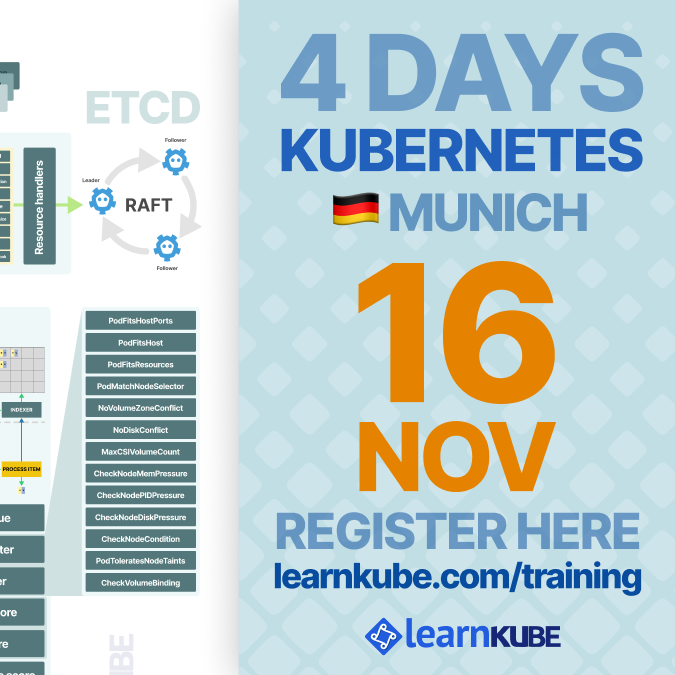
In two weeks, we will be in Munich for our four-day Advanced Kubernetes course!
Join us November 16–19 for live instruction and 60% hands-on labs. We will connect the pieces so you can understand how Kubernetes works—and what to do when it breaks.
Articles
I benchmarked 5 Languages in Kubernetes and here is what your stack actually costs
www.binarybox.org
This article benchmarks Go, Node.js, C#, Java and Python on the same Kubernetes cluster and shows how image size and startup time drive scaling speed and turn language choice into a monthly bill.
I Don’t Trust etcd and Neither Should You
har8.medium.com
This article explains why Kubernetes keeps all its truth in etcd, and how the Raft algorithm gets several servers to agree on one version of reality before your apply returns.
Investigating High Memory Utilization in a WSO2 API Manager Deployment
medium.com
This article explains why a JVM pod can sit at 90% memory and still be perfectly healthy, and how to compare pod memory with real heap usage before hunting for a leak.
Dagster on Kubernetes: When More Nodes Won’t Save You
medium.com
This article explains how to troubleshoot Dagster on Kubernetes when runs stay slow, covering concurrency limits, pod scheduling issues, retries, and PostgreSQL queue coordinator bottlenecks.
We forked Apache Stateful Functions for Flink 2.x — here's why
kzmlabs.hashnode.dev
This article explains why a team forked Apache Stateful Functions to keep it running on Flink 2.x and Java 21, what they changed in the connectors, build and release pipeline, and when you should use the fork.
When failover isn't safe: building high-availability PostgreSQL on Kubernetes
www.datadoghq.com
This case study shows how a Datadog gameday exposed unsafe PostgreSQL failover on Kubernetes and how they made it safe with synchronous replication and Patroni.
Articles worth checking out:
4-Day Advanced Kubernetes Course — Munich
Understand how Kubernetes works and what to do when it breaks.
Learn through live, in-person instruction and 60% hands-on labs, with practical exercises on Helm, Kustomize, and deployment strategies.
Tutorials
Migrating from Ingress NGINX to Gateway API on EKS
medium.com
This tutorial shows how to move an EKS cluster from the retired ingress-nginx controller to Gateway API, covering the AWS Load Balancer Controller CRDs and a zero-downtime traffic shift.
Ephemeral Environments: Automating QA for Reliable Cloud-Native Systems
medium.com
This tutorial shows how to give every pull request its own ephemeral Kubernetes environment so tests run in a clean, isolated setup, using GitHub Actions and Argo CD ApplicationSets.
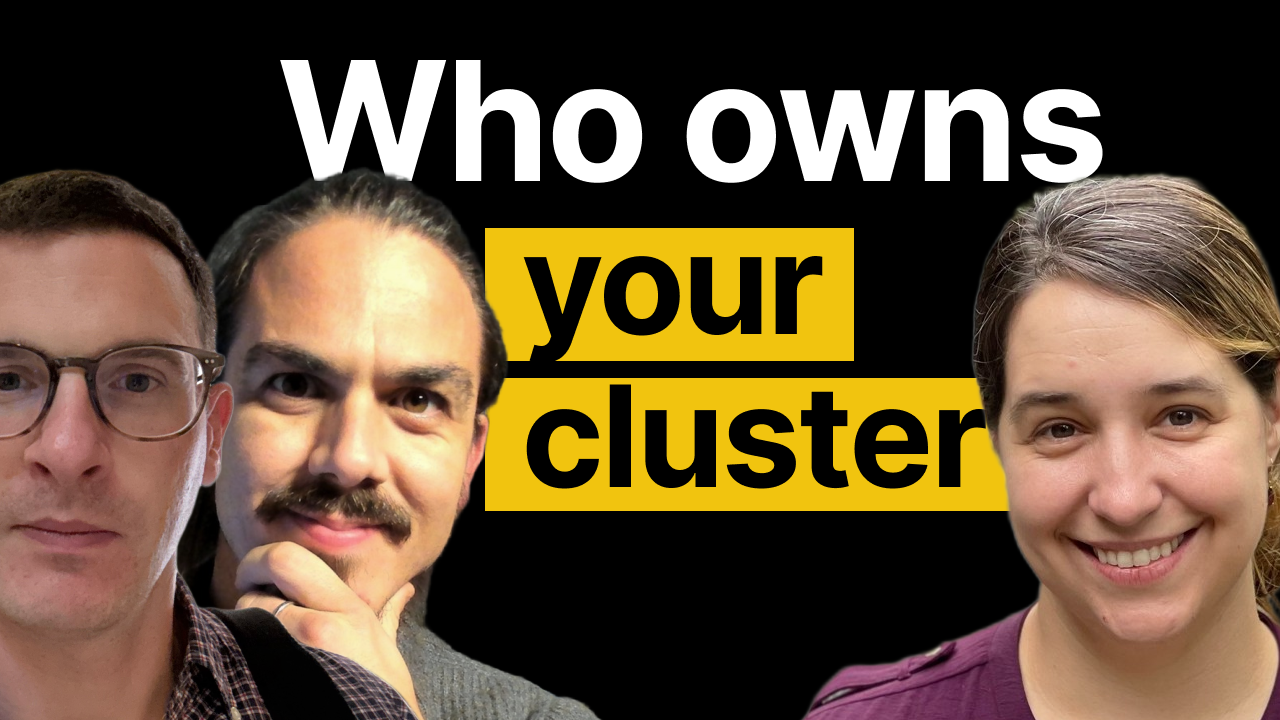
An application release can flood a shared Kubernetes cluster with logs, even though another team owns the logging infrastructure. Who has enough context to find the cause—and who owns the fix?
Molly Sheets joins Daniele Polencic and Bart Farrell to examine how tenancy decisions affect coordination, maintenance, and staffing costs. She connects ownership to business goals and explains why faster AI-assisted changes still need controlled releases.
In this episode:
- The cost of one central team supporting multiple tenancy models
- Why AI Ops needs context from application and platform teams
- Network boundaries for AI-generated workloads
- Maintenance as quality, with canary and cell-based releases
Kubernetes jobs
Test Automation Engineer with Sony Interactive Entertainment
Salary: $114K to $143K a year
Location: based in the office in Waterloo, CA
Tech stack: Kubernetes, Kubernetes, AWS, Docker, GCP, monitoring, Datadog, Grafana, Prometheus, ArgoCD
Machine Learning Engineer with Sony Interactive Entertainment
Salary: $152K to $190K a year
Location: based in the office in Madison, WI, USA
Tech stack: Kubernetes, Kubernetes, AWS, Docker, GCP, monitoring, Datadog, Grafana, Prometheus, ArgoCD
Test Automation Engineer with Sony Interactive Entertainment
Salary: $103.5K to $231.77K a year
Location: based in the office in San Mateo, CA, USA
Tech stack: Kubernetes, Kubernetes, Docker, Unity, Pytest, C, C++, Android, GTest, Unreal Engine
Software Engineer with Smartsheet
Salary: $107.5K to $147.5K a year
Location: remote from
Tech stack: Kubernetes, Kubernetes, AWS, AI tools, LLM, AI, REST APIs, React, Java, Kotlin
DevSecOps Engineer with SpaceX
Salary: $70.74K to $423.5K a year
Location: based in the office in Cape Canaveral, FL, USA
Tech stack: Kubernetes, Kubernetes, On-premise, alerting, alerts, signals, observability, TCP/IP, GitOps, CI/CD
Discover more Kubernetes jobs on Kube Careers →
Code & tools
pvc-autoresizer: grow Kubernetes PVCs automatically
github.com/topolvm
pvc-autoresizer watches how full your volumes are and grows PersistentVolumeClaims automatically before they run out of space, reading usage from Prometheus or the Kubernetes Metrics API.
burn: Kubernetes cost analysis from the CLI
github.com/tanrikuluozlem
burn is a CLI that shows where your Kubernetes cluster is spending money on compute, storage, load balancers and GPUs, and it can check those estimates against your real AWS or Azure bill.
VolSync: replicate and back up Kubernetes volumes
github.com/backube
VolSync replicates Kubernetes persistent volumes between clusters with rsync or rclone, and can also back them up to object storage using restic.
kube-mdns: Auto-Publish Ingress DNS Records over mDNS
github.com/DerSteph
kube-mdns watches Kubernetes Ingress resources and auto-publishes
.localDNS records via mDNS, enabling zero-config LAN service discovery without modifying DNS.kube-forward: Reliable, Configurable Port-Forwarding
github.com/kainlite
kube-forward is a Rust-based CLI that persistently manages multiple kubectl port-forward sessions from a YAML config.
It handles retries, health checks, and protocol-specific rules—auto-reconnecting or gracefully exiting based on policy.
Other interesting projects:
Upcoming Kubernetes events
Nov
9
KubeCon + CloudNativeCon North America 2026
In-person conference organized by Linux Foundation.
Location: Salt Lake City, UT, USA
This is a free event.
Nov
9
LearnKube Day: Salt Lake City 2026
In-person conference organized by LearnKube.
Location: Salt Lake City, UT, USA
This is a free event.
Nov
9
Cloud Native AI & Inference Day
In-person conference organized by CNCF.
Location: Salt Lake City, UT, USA
This event requires an entrance fee
Nov
11
In-person conference organized by Rheinwerk Verlag.
Location: Mannheim, DE
This event requires an entrance fee
Nov
6
In-person conference organized by heapspace.
Location: Belgrade, RS
This event requires an entrance fee


Kubernetes call for papers
19
days
The Call For Paper is open until 23 November 2026 at UTC. More info →
Location: Vilnius, LT
In-person conference organized by DATA MINER.
The conference starts on the 27 November 2026.
- Apply here
38
days
The Call For Paper is open until 12 December 2026 at UTC. More info →
Location: Apenheul, NL
In-person conference organized by Stichting Meetups.
The conference starts on the 11 December 2026.
- Apply here
1
days
Open Source Conference Kolkata
The Call For Paper is open until 5 November 2026 at UTC. More info →
Location: Kolkata, IN
In-person conference organized by Open Source Con India.
The conference starts on the 5 December 2026.
- Apply here
58
days
The Call For Paper is open until 1 January 2027 at UTC. More info →
Location: Raleigh, NC, USA
In-person conference organized by Devopsdays.
The conference starts on the 27 April 2027.
- Apply here
27
days
ContainerDays & AI Context London 2027
The Call For Paper is open until 1 December 2026 at UTC. More info →
Location: London, GB
In-person conference organized by Dockland Media Group.
The conference starts on the 11 February 2027.
- Apply here
44
days
The Call For Paper is open until 18 December 2026 at UTC. More info →
Location: Amsterdam, NL
In-person conference organized by Dawn Technology..
The conference starts on the 19 March 2027.
- Apply here
Until next time!
— Dan