
Kubernetes Insights Report - February 2026
Published in March 2026
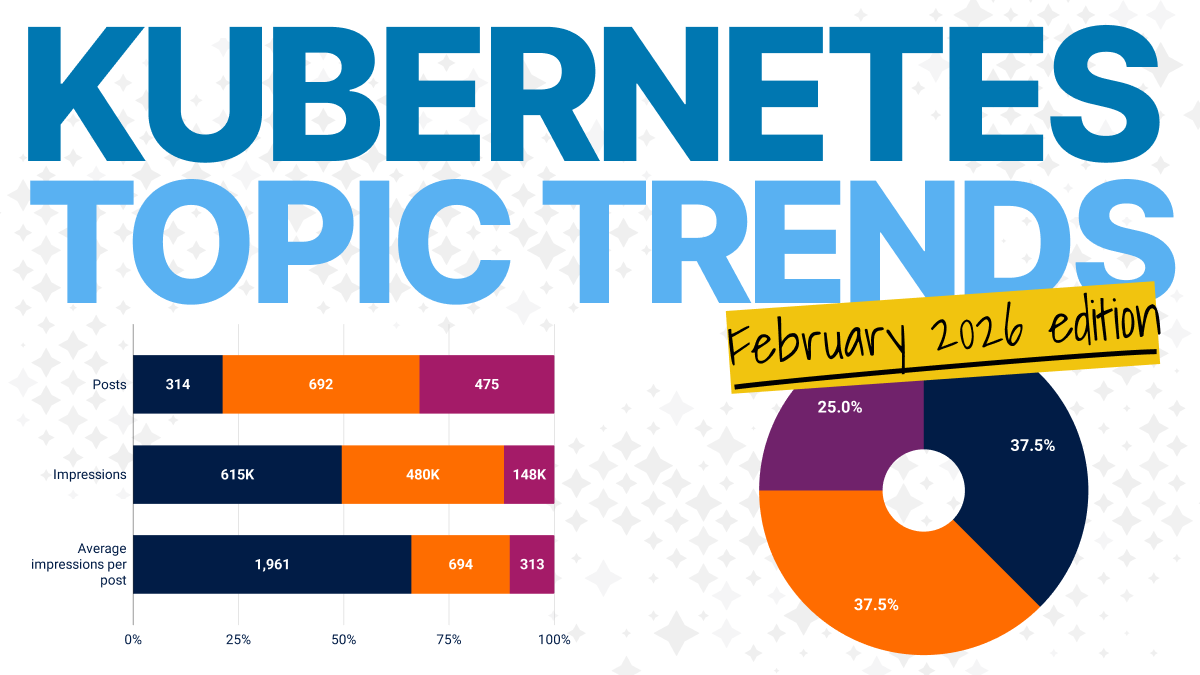
TL;DR: Every month, the LearnKube network (LearnKube, Kube Architect, Kubesploit, Kube Builders, Kube Events, Kube Careers, KubeFM, and Kube Today) curates and shares Kubernetes news, tutorials, and tools across social media. This report looks at what readers engaged with most in February 2026 — which topics sparked interest, which content formats drove clicks, and what the data tells us about where the Kubernetes community’s attention is heading.
In February 2026, 1,485 pieces of Kubernetes content reached readers across multiple platforms and were seen 1.24 million times.
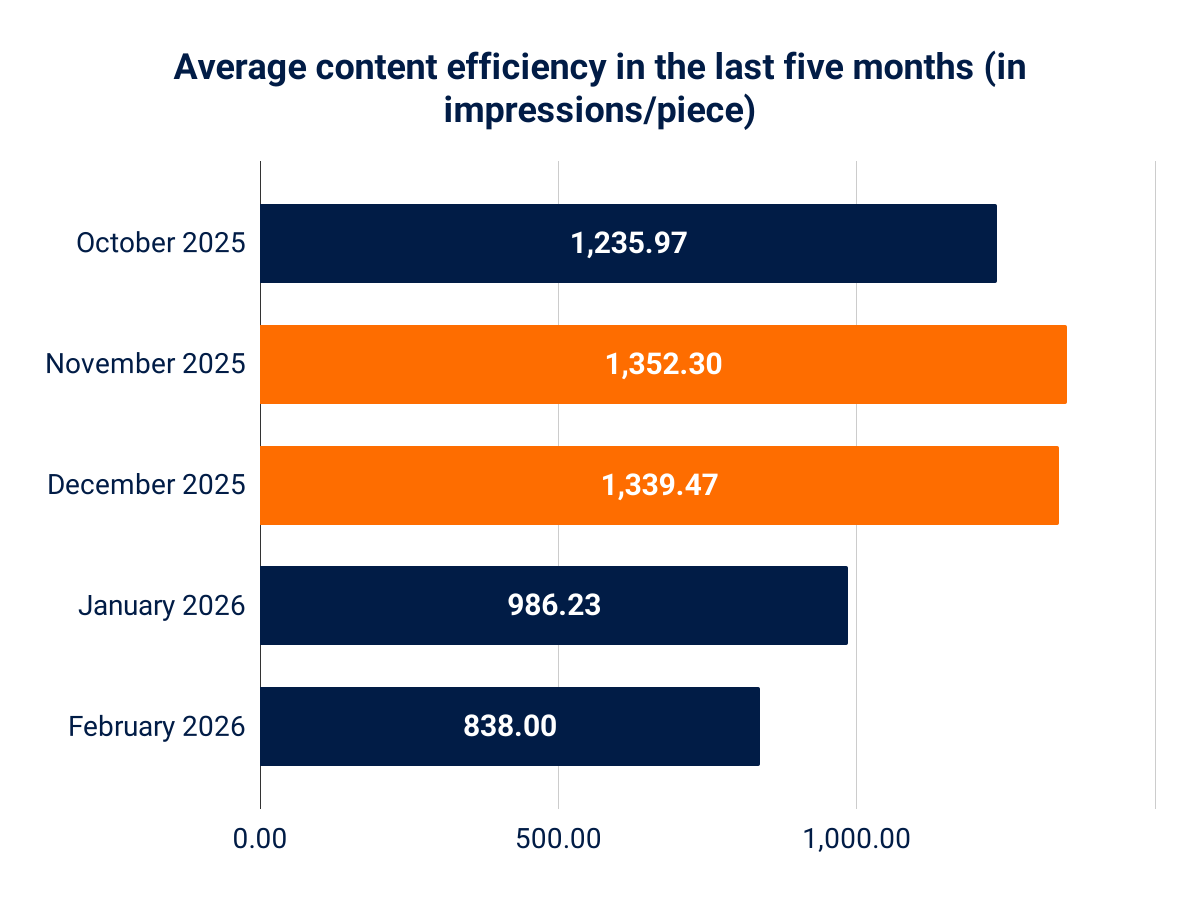
February continued January's pattern: readership was up 15-20% year-on-year, but still below the Q4 2025 average. March 2026 data will help confirm whether this is a quarterly reset or a temporary dip.
Executive Summary
Readership Dashboard — February vs January 2026
Readers viewed our content 1,245,094 times in February 2026 — 10.64% higher than February 2025, 4.12% above the 2025 average, but 7.84% lower than January 2026.
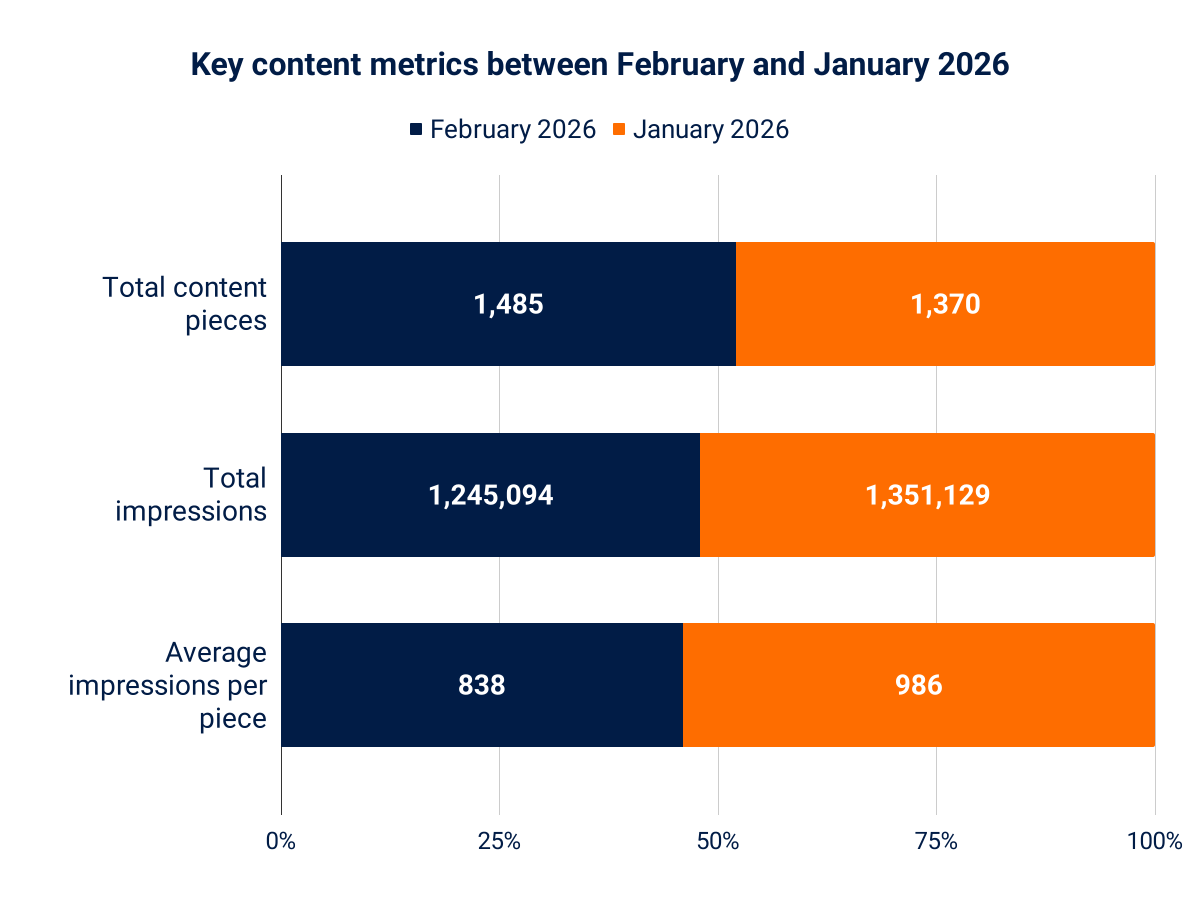
The recent dip looks real, but click intent improved.
Q4 2025 set an unusually high bar, so Q1 2026 looks softer on raw reach alone.
Year-on-year, readership is still stronger than in 2025.
When we compare like-for-like months, reader engagement in Q1 2026 is still 15-20% higher than Q1 2025.
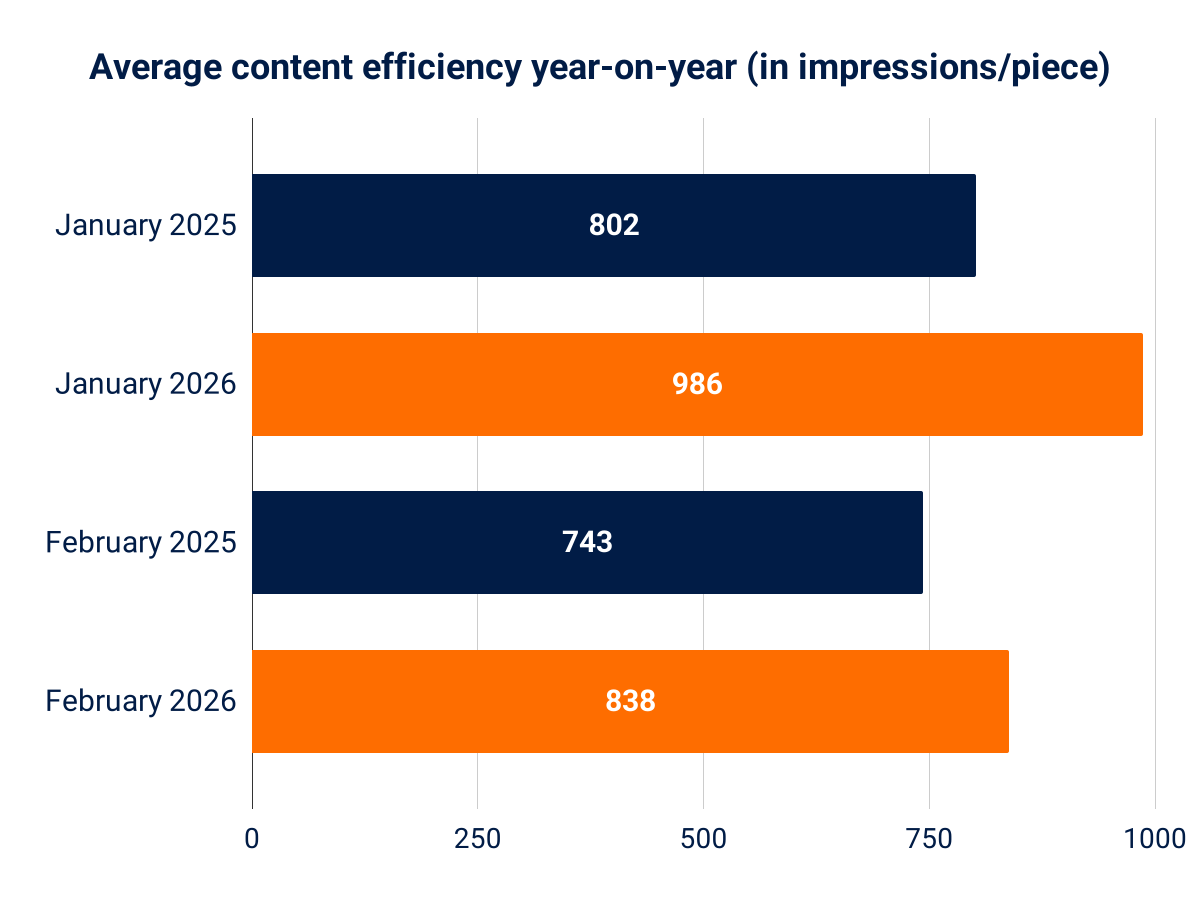
February readership is up 12% year-on-year versus February 2025.
In short: readers are more engaged than last year, even if Q4 2025 remains our peak period.
Top 3 Readership Insights
- Platform Engineering drew the strongest click intent among major categories — 6.57% CTR in February.
- Configuration Management held reader interest, again — 1,888 impressions/piece, the highest average reach per category in February 2026.
- Walkthroughs dominate the most-clicked list — More than 50% of the highest-CTR content pieces are hands-on walkthroughs.
Where Readers Found Content
Let's look at where readers discovered content across platforms.
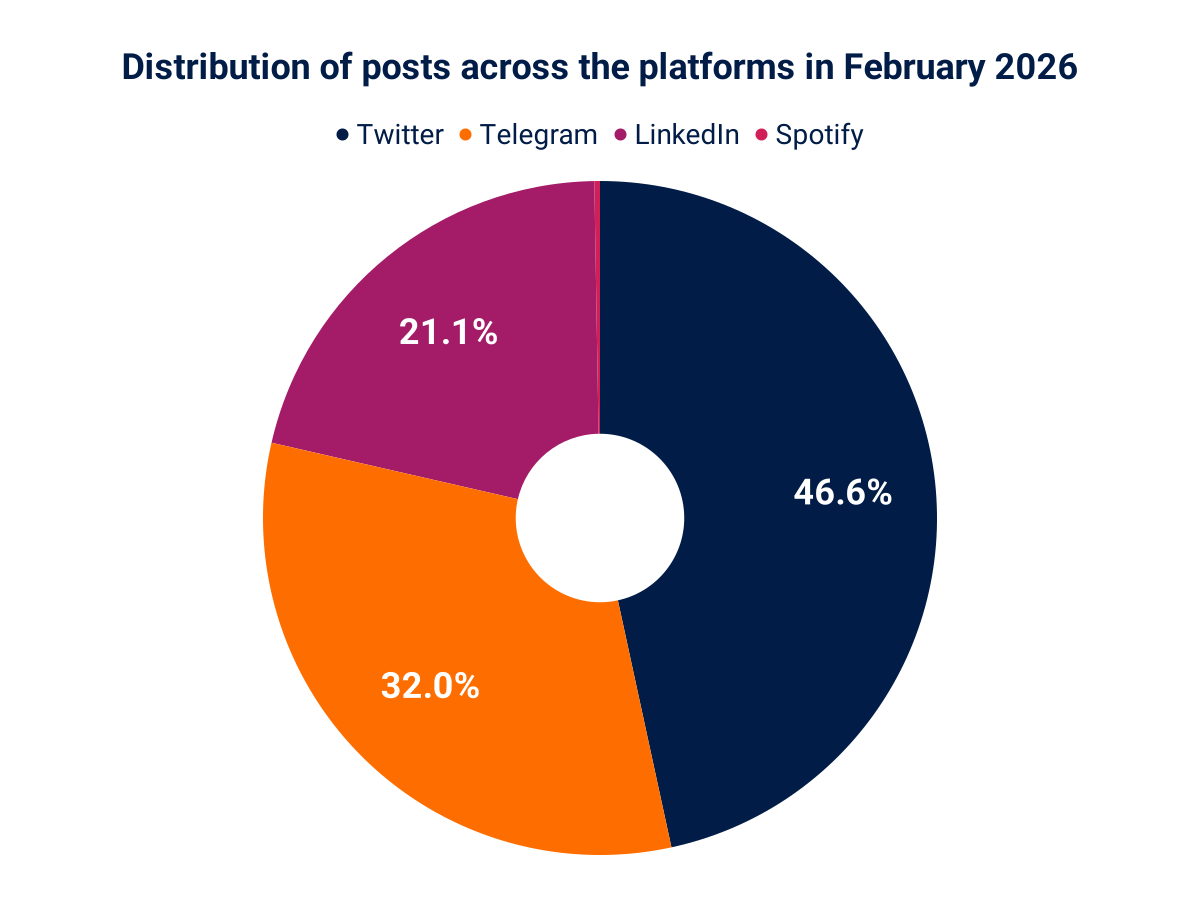
Readers encountered 46.6% of content on Twitter, 32% on Telegram, and 21.1% on LinkedIn.
Readers also had access to four podcast episodes on YouTube and Spotify.
How did reader engagement differ by platform?
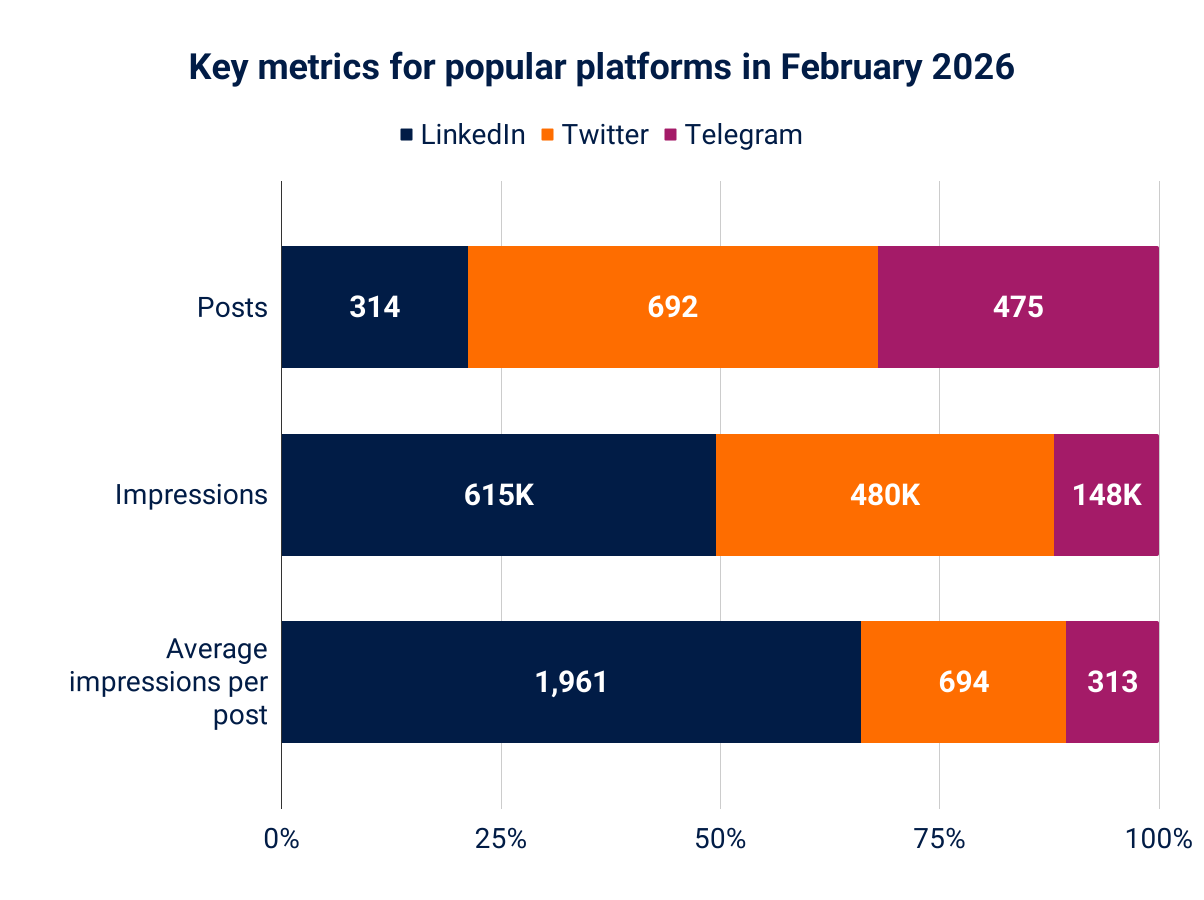
LinkedIn continues to attract the strongest reader response for Kubernetes content, with Twitter next and Telegram third in both total volume and click efficiency.
If we zoom out, though, the platform trends reveal an interesting story.
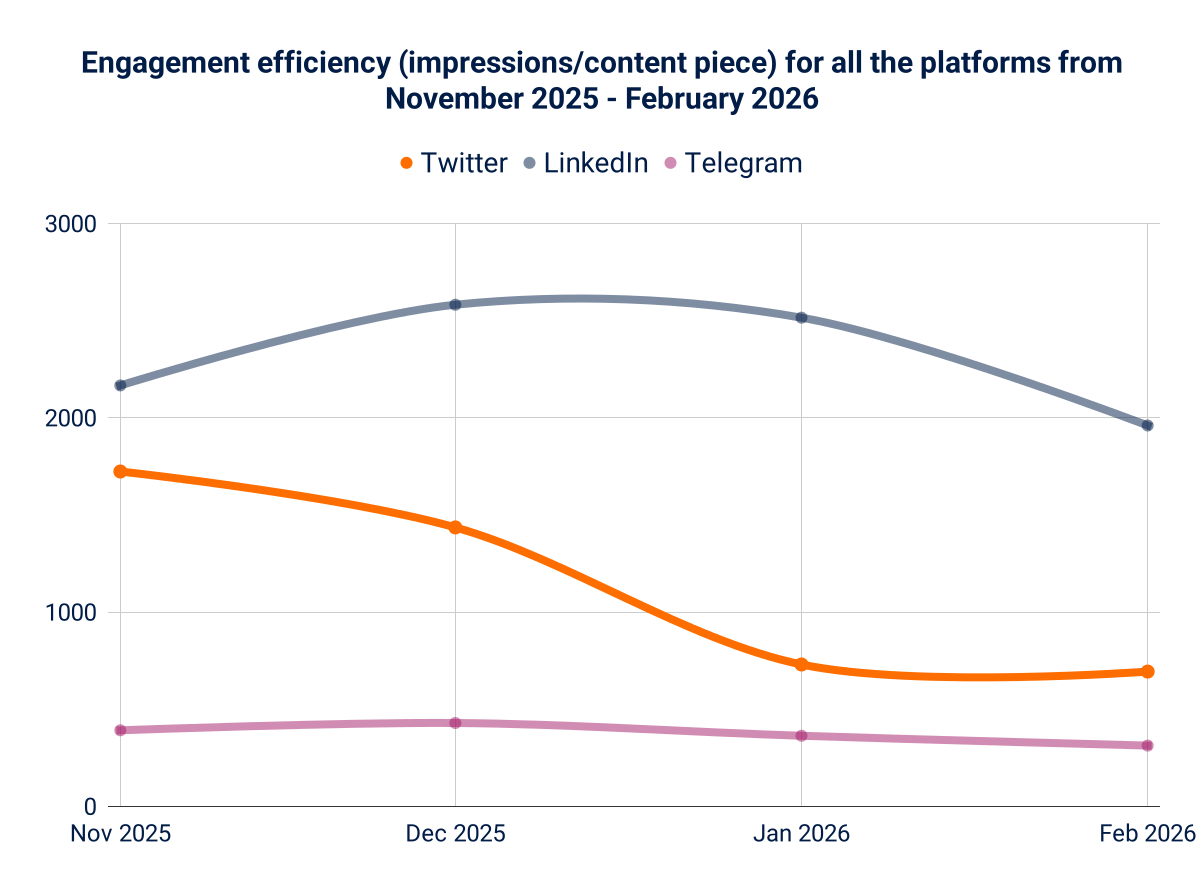
Twitter engagement keeps falling, while LinkedIn and Telegram stabilize.
Key observations:
- Reader engagement on LinkedIn and Telegram dipped slightly in February.
- Reader engagement on Twitter kept sliding: down 52% from December 2025 to January 2026, then another 5% from January to February. Total impressions also fell 3-5% month-on-month.
We need a deeper Twitter diagnosis: either platform measurement changed, or our distribution approach no longer aligns with reader behavior. March data should help clarify which one.
What Topics Readers Cared About
February revealed some notable shifts in reader interest across topic categories.
| Categories | Content pieces | Total impressions | Average impressions per piece | CTR |
|---|---|---|---|---|
| Configuration Management | 28 | 52,885 | 1,888.75 | 5.79% |
| Networking | 24 | 34,070 | 1,419.58 | 3.83% |
| Observability | 26 | 33,839 | 1,301.50 | 6.23% |
| Resource Optimization | 16 | 20,415 | 1,275.94 | 4.91% |
| Platform Engineering | 39 | 48,690 | 1,248.46 | 6.57% |
| Data on Kubernetes | 6 | 6,604 | 1,100.67 | 2.64% |
| Infrastructure | 100 | 96,794 | 967.94 | 3.29% |
| Security | 36 | 34,448 | 956.89 | 3.34% |
| Development | 22 | 20,916 | 950.73 | 3.21% |
| Certifications | 7 | 5,138 | 734.00 | 2.14% |
| Edge & IoT | 3 | 1,843 | 614.33 | 2.06% |
What this says about readers:
- Readers kept returning to Configuration Management (1,888 impressions/piece, 5.79% CTR).
- Interest in Development cooled after January's spike, suggesting January was likely an outlier.
- Platform Engineering achieved the strongest click intent at 6.57% CTR, even at meaningful volume.
- Overall reach was lower, but reader intent was higher: average CTR across major categories reached 4.24%.
How Reader Engagement Shifted (February vs January 2026)
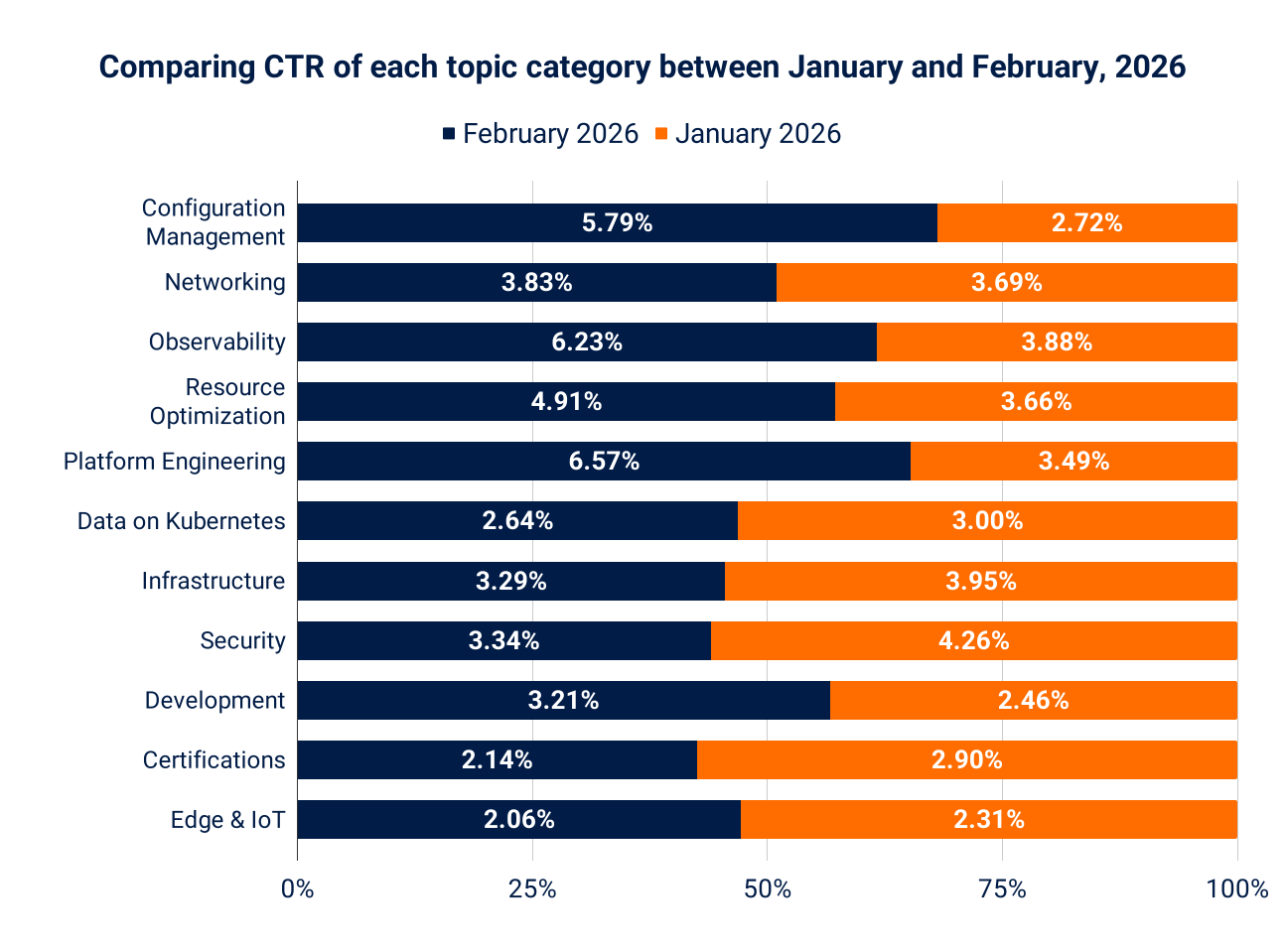
How did click-through behaviour change between the two months? (Excluding Edge & IoT and Certifications due to low volume):
- Readers clicked much more on Platform Engineering (+3.08 pp), Configuration Management (+3.07 pp), and Observability (+2.35 pp).
- Readers clicked less on Security (−0.92 pp) and Infrastructure (−0.66 pp), likely after January peaks and broader, less-intent traffic.
- Across categories, readers reached a record 4.42% average CTR, beating January's 3.45% even with lower overall reach.
Readership by Brand
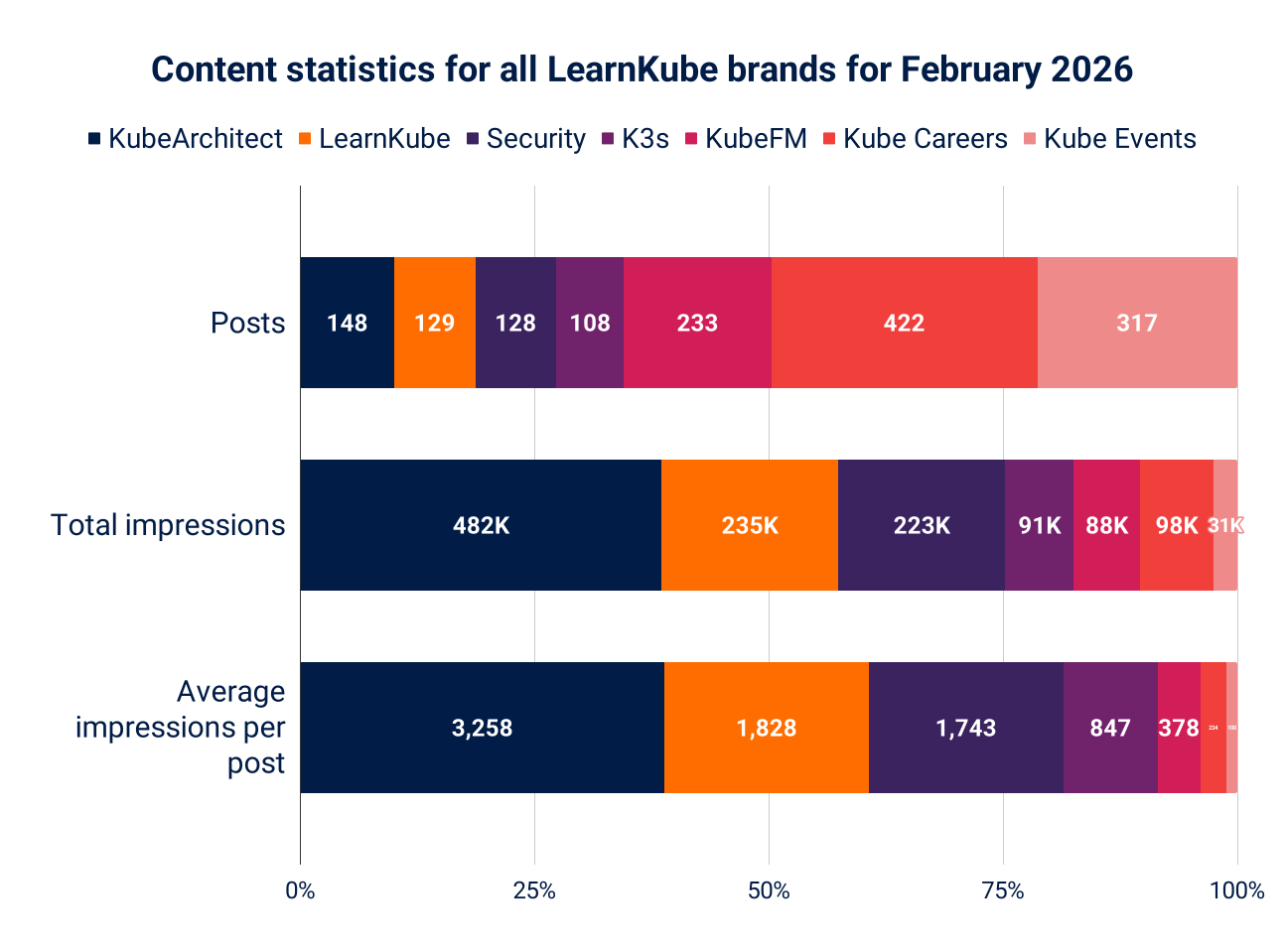
Engagement patterns across brands in January and February stayed broadly consistent:
- Readers still favor architecture content. KubeArchitect drew nearly half a million impressions, and engagement dipped only 7%.
- Readers engage more consistently with tool-focused K3s posts than with Careers, Events, and Podcast posts, likely because tooling topics apply to a wider audience.
What Readers Clicked On Most
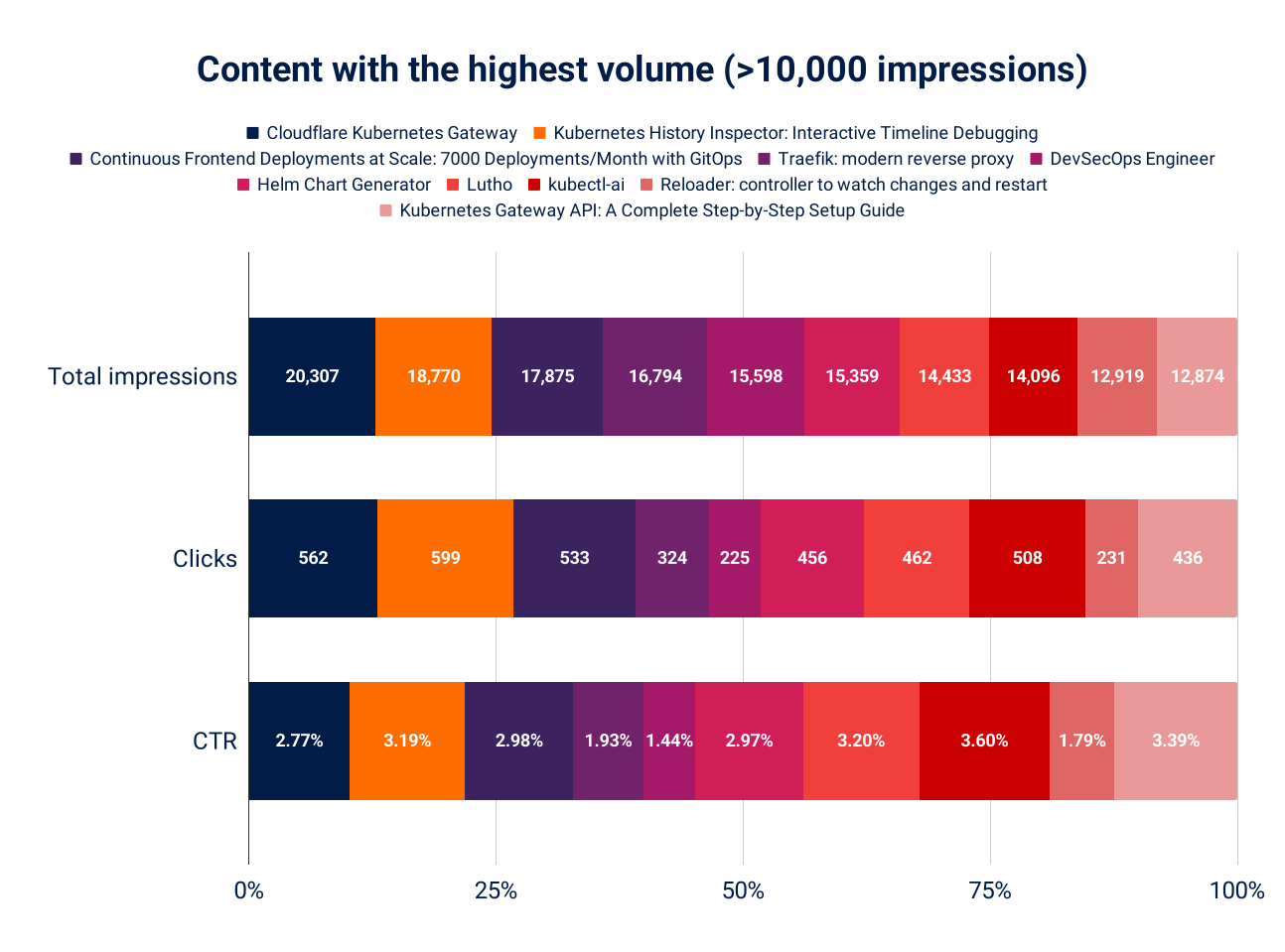
- Readers gravitated to tool overviews: seven of the top ten pieces were tooling posts.
- Top examples were Cloudflare Kubernetes Gateway (31,843 impressions), Kubernetes History Inspector (18,770), Traefik (16,794), and Reloader (12,919).
- A DevSecOps job post also reached ~15K impressions, reinforcing that career content performs when the role is highly relevant.
Most-Clicked Content (>4% CTR and above 5,000 impressions)
| Content | CTR | Total impressions | Clicks |
|---|---|---|---|
| Stop Hunting Logs: How OpenTelemetry Brings Metrics, Logs, and Traces Together | 8.23% | 6786 | 559 |
| Dynamic Istio Ingress Gateway Management with Kyverno | 6.13% | 5625 | 345 |
| KubeGUI: Kubernetes admin UI | 5.69% | 9238 | 526 |
| Detecting vulnerabilities in public Helm charts | 5.51% | 5402 | 298 |
| When high availability brings downtime | 4.55% | 8692 | 396 |
| Building Production-Ready Micro Frontends in Kubernetes: A Pragmatic Approach | 4.51% | 6600 | 298 |
| kubeconfig-generator: Create Kubeconfig Files for Kubernetes Service Accounts | 4.38% | 5312 | 233 |
| Dockadvisor: Lightweight Dockerfile Linter with Quality Scoring | 4.38% | 11049 | 484 |
What happens when we categorise the most-clicked content by topic?
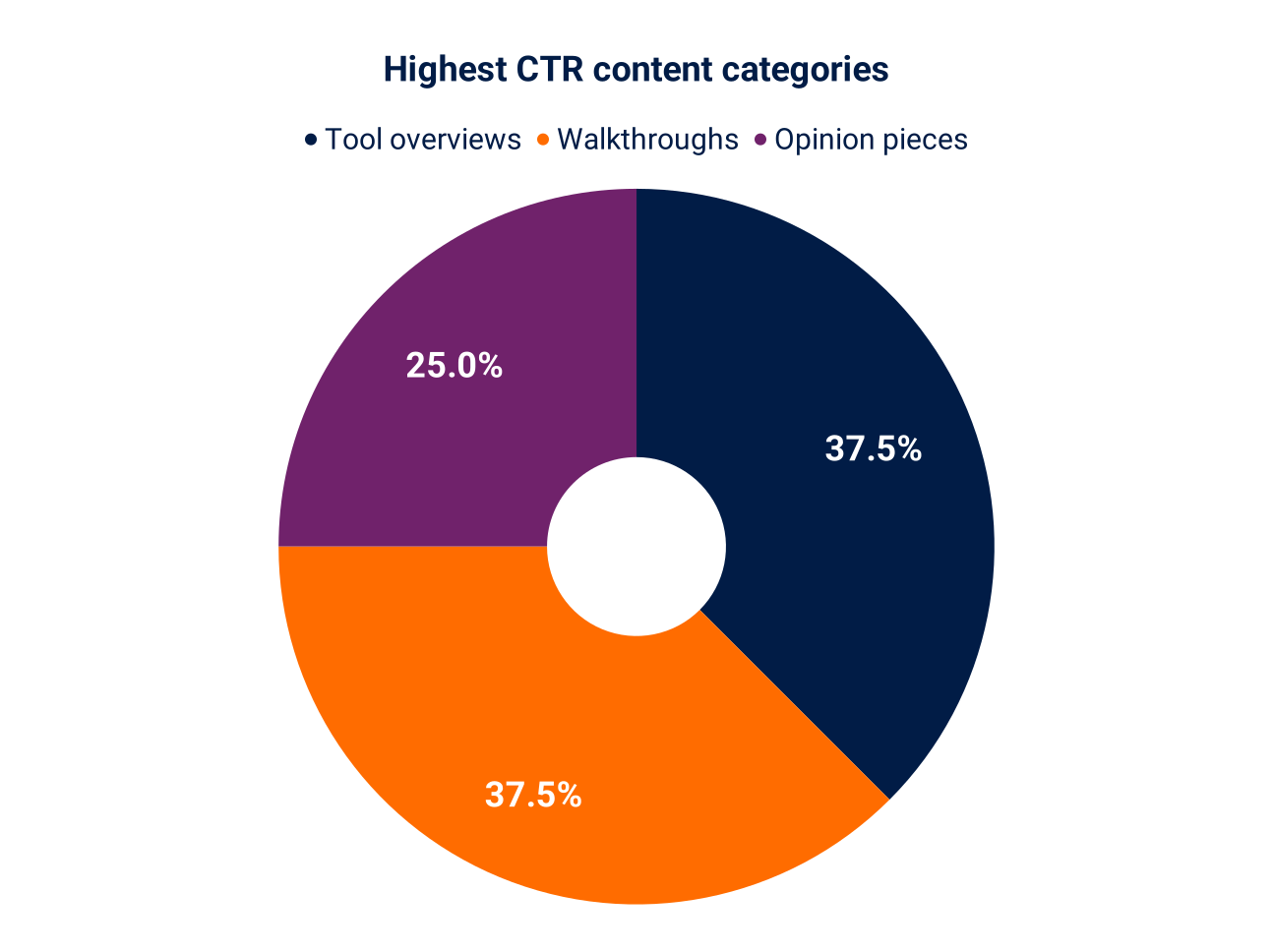
The pattern is clear:
- Readers click on walkthroughs with strong titles and a clear story arc. The top CTR piece (OpenTelemetry) and other high performers used problem-first narrative framing.
- 33% are tool overviews, confirming that the community actively seeks out new tooling.
- 22% are opinion pieces, showing an appetite for perspective and analysis alongside practical content.
Key Trends
Platform Engineering content is back in focus.
In February, readers clicked Platform Engineering content at 6.57% CTR — the highest among high-volume categories — with 48K impressions.
This looks like real audience demand, but March will tell us whether it sustains.
Popular job listings can attract blockbuster attention, too.
For the second month in a row, readers pushed a job vacancy post into the most in-demand list, signaling strong interest in role-specific career content.
Career attention appears to be concentrated on specific job titles rather than on broad hiring updates.
Architecture content stays dependable.
Even with a lower total reach, readers stayed loyal to architecture content. Its consistency across the year suggests this remains a core audience interest.
Tool-focused content has a broader audience appeal.
Readers continue to respond strongly to tool-focused K3s content. Most top performers by reach and CTR were tool overviews, indicating broader appeal than Event, Career, and Podcast posts.
What This Means
1. Twitter readership needs investigation
Signal: Reader engagement on Twitter is down by around 60% since November 2025.
Implication: Either Twitter’s distribution changed, or Kubernetes readers are shifting elsewhere for technical content. A focused platform analysis is warranted.
2. Platform Engineering content deserves higher editorial priority
Signal: Readers delivered record CTR despite lower overall reach.
Implication: Readers are increasingly seeking Platform Engineering-focused Kubernetes content. This could be an emerging trend for the coming months.
3. Average CTR is at an all-time high, despite low volume
Signal: Readers delivered a 4.42% average CTR across popular topic categories, despite a six-month low in total reach.
Implication: Prioritize formats and topics that improve discovery without diluting click intent.
4. Tool-based content is today's leverage
Signal: Tool content combines strong reach with strong CTR.
Implication: Readers are actively seeking tooling content, so we can scale this demand through K3s and reuse successful formats across brands.
Conclusion
February 2026 saw a continuation of the cooldown from Q4 2025 highs — but the underlying reader behaviour tells a more nuanced story:
- Readers are more selective: even when total impressions fell, average CTR grew by more than 25%.
- Platform Engineering content is the breakout category. It achieved the highest CTR among high-volume topics this month, signaling strong current demand.
- Development content isn’t trending. While January’s performance for Development content caused a stir, it was put to rest in February, as the topic category returned to its not-so-great normalcy.
- Great titles + storytelling attract reader clicks. Readers are more likely to click on intriguing (not deceptive) titles, and they are more likely to read a walkthrough/tutorial with a POV-esque style.
Architecture-based content continues to dominate overall readership, accounting for more than 40% of all impressions. Meanwhile, the sharp decline in Twitter engagement raises questions about platform dynamics that warrant closer examination.
Looking ahead, March should clarify the Twitter dilemma. Is Platform Engineering an emerging reader trend or a short spike, like Development in January? Are readers clicking tool overviews because they are truly preferred, or because alternatives are weaker? We'll find out in the next report.