Learn Kubernetes Weekly issue 168 · 28 Jan 2026
Deleting CRDs, Carbon-Aware ML Training, vLLM Setups for Spiky Traffic, Argo Resource Protection, Reproducible Infrastructure with NixOS
This newsletter is brought to you by Kubex — Automated Resource Optimization for Kubernetes, GPUs and AI Workloads
Articles
What Happens When You Delete a Kubernetes CustomResourceDefinition?
marcincuber.medium.com
This article explains what happens internally when you delete a Kubernetes CRD, covering finalizers, cascading deletion, and orphaned custom resources.
Kubernetes Resource Management ebook for Platform Owners
kubex.ai
Platform teams face a resource paradox: clusters full of unused capacity while developers demand more.
This guide shows how to manage Kubernetes resources at scale without slowing teams down or wasting budget.
sponsored
Making ML Training Carbon-Aware with Compute Gardener
medium.com
This article describes how Compute Gardener, an open-source Kubernetes scheduler plugin, automatically delays non-critical ML training jobs until electricity grid carbon intensity is lower to reduce carbon emissions without modifying application code.
8 vLLM Serving Setups That Handle Spiky Traffic
medium.com
This article compares 8 different vLLM serving setups for handling spiky traffic in production LLM deployments, including autoscaling strategies and architecture patterns.
How I Prevent My Kubernetes Resources from Being Deleted When Argo Apps Are Removed
mirilittleme.medium.com
This article explains how to prevent Kubernetes resources from being deleted when Argo CD Applications or ApplicationSets are removed.
Reproducible Kubernetes infrastructure with NixOS and OKD
medium.com
This article demonstrates how to build reproducible Kubernetes infrastructure using NixOS and OKD for declarative node configuration and cluster management.
Articles worth checking out:
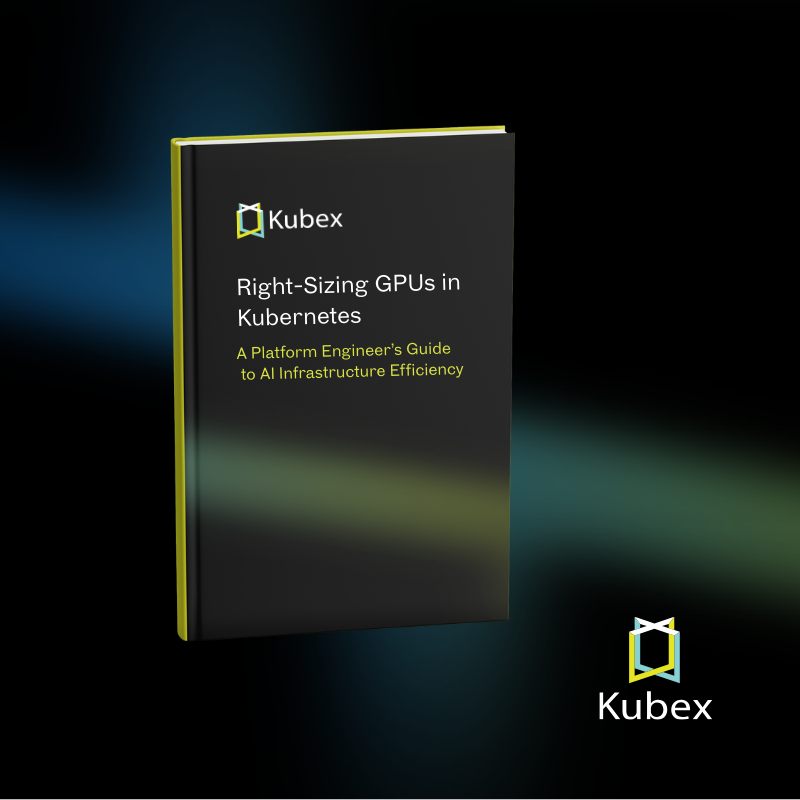
Right-Sizing GPUs in Kubernetes: A Platform Engineer’s Guide to AI Infrastructure Efficiency
GPU spend is rising faster than the tooling to manage it.
Most teams show healthy utilization while requests overshoot real usage by 3x. This ebook shows how to fix GPU waste before costs spiral.
Tutorials
Getting my feet wet with Crossplane
blog.frankel.ch
This tutorial teaches how to use Crossplane on a Kubernetes cluster to provision, configure, and manage a Google Kubernetes Engine (GKE) cluster via declarative YAML manifests.
Deploying an OpenTelemetry-Native LGTM Stack on Kubernetes
awsmorocco.com
This tutorial teaches how to deploy a complete LGTM observability stack (Loki, Grafana, Tempo, Mimir) with OpenTelemetry on Kubernetes for unified metrics, logs, and traces.
How we reduced a container image by 99.7% (800gb to 2gb) | sealos blog
sealos.io
This case study shows how Sealos reduced a container image from 1.2GB to 100MB by:
- optimizing the base image,
- using multi-stage builds,
- and removing unnecessary dependencies in a Next.js application.
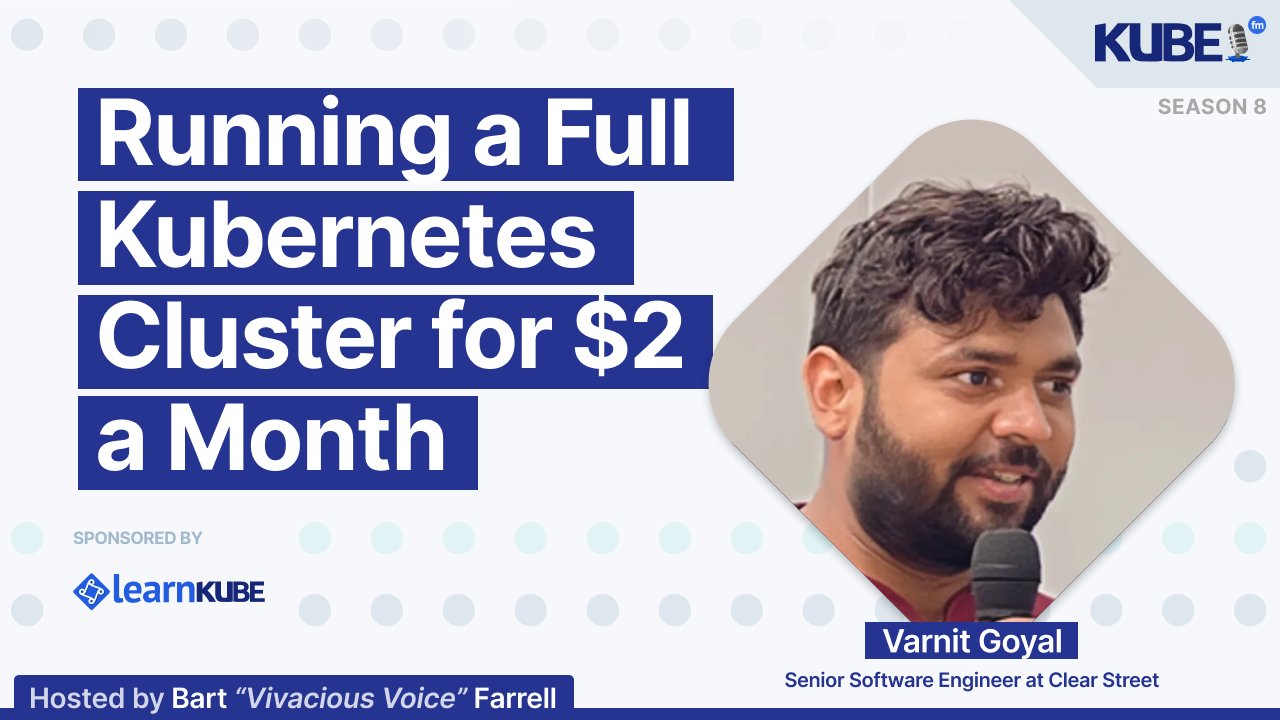
Most developers assume Kubernetes requires an enterprise budget. Varnit Goyal proves otherwise — he built a full three-node Kubernetes cluster for $2.16/month using Rackspace Spot Instances.
The trick: pick non-default instance types, distribute nodes across low-demand regions, and let Kubernetes handle rescheduling when nodes get preempted. For service exposure, he replaced the $10/month load balancer with Tailscale Funnel — free.
In this episode:
- How Spot Instance bidding works and which strategies keep costs and preemption low
- Using Tailscale Kubernetes operator as a free alternative to traditional load balancers
- Running real development dependencies (Kafka, Elasticsearch, Postgres) on a budget cluster
A practical walkthrough of what Kubernetes actually needs to function — and what you can strip away.
Kubernetes jobs
Platform Engineer with AMERICAN SYSTEMS
Salary: $155.7K to $260K a year
Location: remote from the United States of America
Tech stack: Kubernetes, Ansible, Shell, Python, Gitlab, Helm, Rancher
Systems Performance Engineer with Datadog
Salary: $187K to $240K a year
Location: based in the office (and remote from home) in Boston, MA / New York, NY, USA
Tech stack: Kubernetes, Datadog, containerd, AWS, Go, Javascript, Rust, C
Platform Engineer with Peraton
Salary: $112K to $179K a year
Location: based in the office in Washington, D.C, USA
Tech stack: Kubernetes, Grafana, AWS, Terraform, Shell, Python, Prometheus, Helm, ArgoCD
DevSecOps Engineer with Corelight
Salary: $221K to $268K a year
Location: remote from North America
Tech stack: Kubernetes, Go, Splunk
DevOps Engineer with Corelight
Salary: $158K to $198K a year
Location: remote from North America
Tech stack: Kubernetes, Grafana, AWS, Azure, GCP, Docker, Terraform, Pulumi, Ansible, Puppet
Discover more Kubernetes jobs on Kube Careers →
Code & tools
github.com/argoproj-labs
This tool extends Argo CD with a hub-and-spoke agent architecture in which lightweight agents in remote clusters connect back to a central control plane.
Descheduler: Kubernetes pod balancer
github.com/kubernetes-sigs
You can use the Kubernetes Descheduler to evict pods based on specific strategies so that the pods can be rescheduled onto more appropriate nodes.
ForkSpacer: environment forker
github.com/forkspacer
ForkSpacer is a Kubernetes tool that spreads pods across nodes based on resource usage and topology to prevent hot spots and reduce noisy neighbor problems.
github.com/kubernetes-tenants
Lynq is a Kubernetes-native tool that lets you query data inside your cluster using SQL-like language and view results from pods, nodes, and services without writing custom code.
Headlamp: Extensible Kubernetes Web UI
github.com/headlamp-k8s
Headlamp is an easy-to-use and extensible Kubernetes web UI providing a user-friendly interface for managing and debugging Kubernetes clusters.
Other interesting projects:
Upcoming Kubernetes events
Jan
29
Online workshop organized by LearnKube.
This is a virtual event
This event requires an entrance fee
Jan
29
Eliminate OOM Kills and Resource Waste with Automation
Online webinar organized by Kubex.
This is a virtual event
This is a free event.
Jan
29
GitOps on Day Two, or How to Bring Order to Chaos with Harbor, ArgoCD, Renovate, and N8N
In-person meetup organized by Cloud Native Sofia.
Location: Sofia, BG
This is a free event.
Feb
1
In-person conference organized by FOSDEM.
Location: Brussels, BE
This event requires an entrance fee
Feb
3
In-person conference organized by CND France.
Location: Paris, FR
This event requires an entrance fee
Feb
4
In-person conference organized by CfgMgmtCamp.
Location: Ghent, BE
This event requires an entrance fee
Feb
12
In-person conference organized by Container Days.
Location: London, UK
This event requires an entrance fee
Use KUBEEVENTS to get 50% off


Kubernetes call for papers
expired
The Call For Paper was open until 15 February 2026 at UTC. More info →
Location: Ghent, BE
In-person conference organized by CfgMgmtCamp.
The conference starts on the 4 February 2026.
- Apply here
expired
The Call For Paper was open until 28 February 2026 at UTC. More info →
Location: Hamburg, DE
In-person conference organized by Container Days.
The conference starts on the 4 September 2026.
- Apply here
expired
The Call For Paper was open until 6 March 2026 at UTC. More info →
Location: Bologna, IT
In-person conference organized by CND Italy.
The conference starts on the 18 May 2026.
- Apply here
expired
KubeCon + CloudNativeCon India 2026
The Call For Paper was open until 2 February 2026 at UTC. More info →
Location: Mumbai, IN
In-person conference organized by CNCF.
The conference starts on the 19 June 2026.
- Apply here
expired
Kubernetes Community Days Beijing 2026
The Call For Paper was open until 24 February 2026 at UTC. More info →
Location: Beijing, CN
In-person conference organized by KCD Beijing.
The conference starts on the 30 December 2025.
- Apply here
expired
Kubernetes Community Days Toronto Canada 2026
The Call For Paper was open until 17 February 2026 at UTC. More info →
Location: Toronto, CA
In-person conference organized by KCD Toronto.
The conference starts on the 13 May 2026.
- Apply here
expired
Kubernetes Community Days Texas 2026
The Call For Paper was open until 6 February 2026 at UTC. More info →
Location: Austin, TX, USA
In-person conference organized by KCD Texas.
The conference starts on the 15 May 2026.
- Apply here
expired
The Call For Paper was open until 20 March 2026 at UTC. More info →
Location: Amsterdam, NL
In-person conference organized by Cloud Native Amsterdam.
The conference starts on the 22 May 2026.
- Apply here
expired
Kubernetes Community Days Panama 2026
The Call For Paper was open until 3 March 2026 at UTC. More info →
Location: Panama City, PA
In-person conference organized by KCD Panama.
The conference starts on the 20 April 2026.
- Apply here
Until next time!
— Gulcan