
What the Popularity of Emerging Tools Tells Us About Kubernetes' Future
Published in July 2026
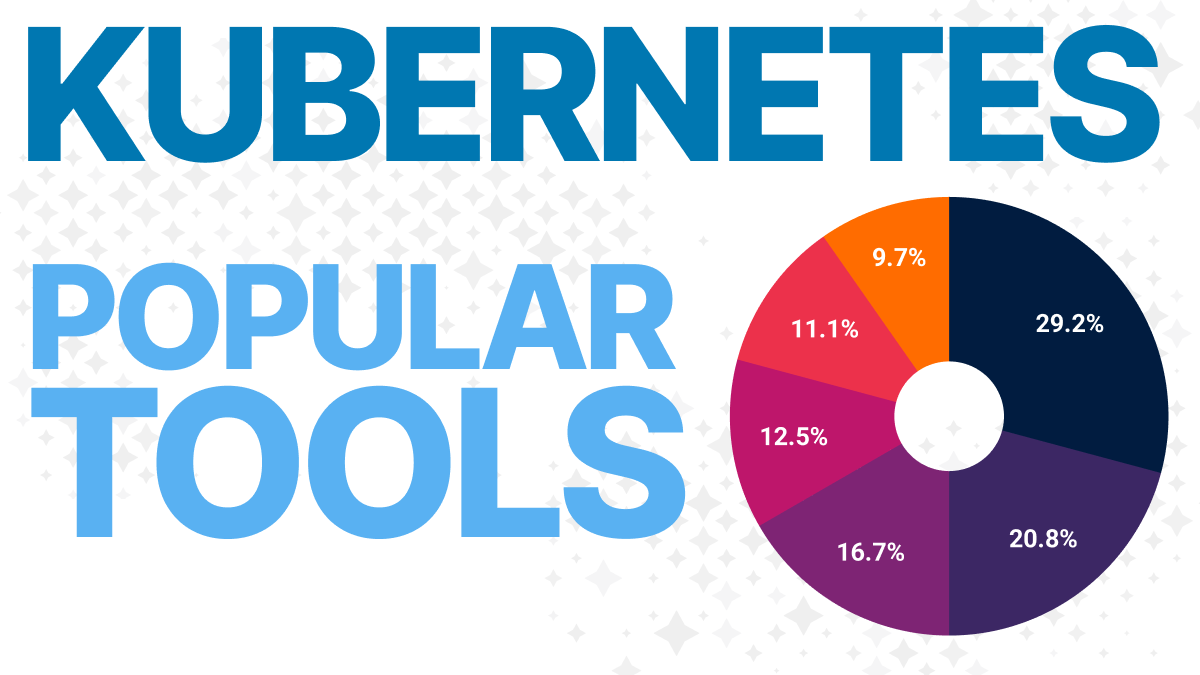
What the Popularity of Emerging Tools Tells Us About Kubernetes' Future
Over the past year on KubeFM, Bart (the KubeFM's host) asked every guest the same simple question: What emerging tools are you keeping an eye on?
After more than a hundred conversations, the most interesting finding wasn't which tool ranked first. It was where Kubernetes innovation was happening.
Kubernetes has matured into a stable platform, while innovation is increasingly happening in the tools around it. What began as simple projects addressing Kubernetes' limitations has evolved into stable tools that make Kubernetes smarter, simpler, and more capable.
The tools that repeatedly came up in these conversations signal where Kubernetes is headed.
Infrastructure is becoming autonomous
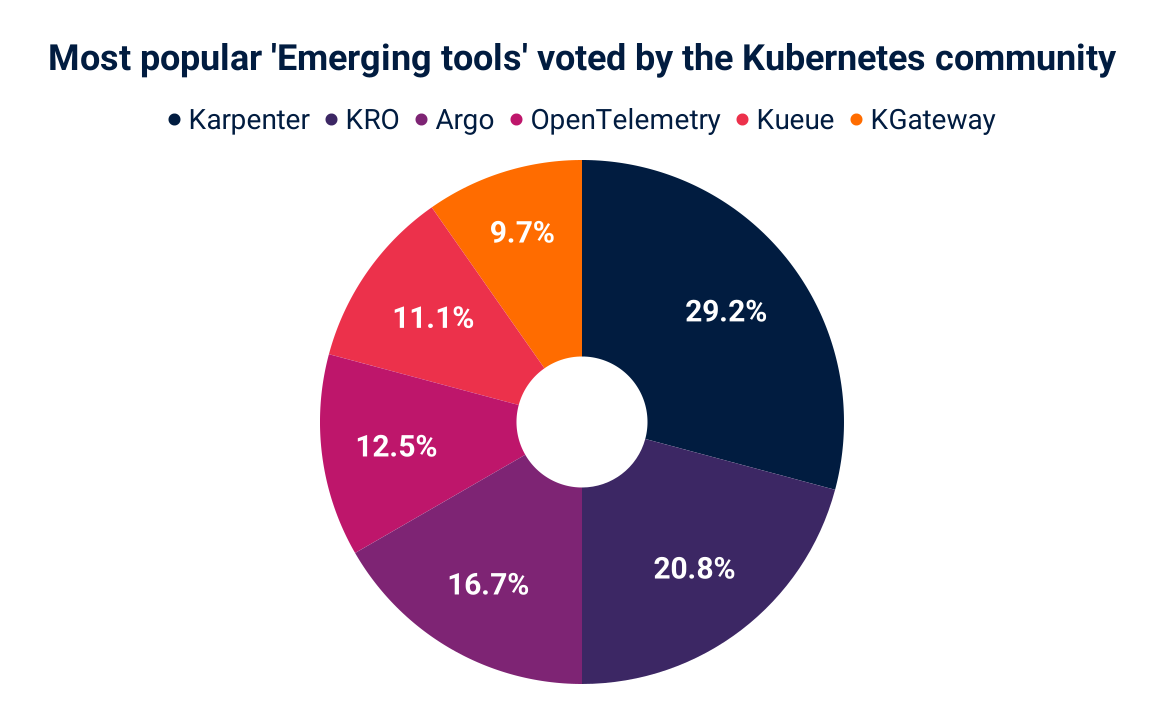
Nearly 30% of Kubernetes experts named Karpenter as the most exciting emerging project.
Karpenter's journey from a fast-moving AWS project to a stable, widely adopted Kubernetes component shows how continuous innovation, not just new ideas, keeps a project at the center of the ecosystem.
What makes the tool better than the traditional Cluster Autoscaler is its ability to provision infrastructure dynamically without relying on predefined node groups, enabling clusters to make faster, more cost-effective scheduling decisions.
Karpenter's popularity shows a broader shift: infrastructure is becoming increasingly autonomous. Looking ahead, platform engineers may not need to make every cluster capacity decision. Kubernetes may do it for them.
Platform engineering is moving up the stack
Kubernetes Resource Orchestrator (KRO) bundles multiple Kubernetes resources into a single, reusable API, letting developers use platforms as-is rather than assembling individual Kubernetes objects.
Introduced by AWS at KubeCon North America in 2024, KRO has rapidly evolved into a vendor-neutral project backed by multiple cloud providers.
Its growing popularity points to a larger trend: platform engineering is replacing complex Kubernetes objects with simpler, higher-level APIs.
Git has become the control plane
Argo CD keeps Kubernetes applications continuously synchronized with Git, ensuring clusters always reflect the desired state.
What began as a GitOps deployment tool has grown into the flagship of the broader Argo Project, which also includes Argo Workflows, Rollouts, and Events.
Argo CD's continued popularity suggests that GitOps is now an operational mainstay, replacing manual deployments with declarative automation.
Observability is becoming an open standard
Unlike most projects on this list, OpenTelemetry isn't a single tool. It's an open standard for collecting logs, metrics, and traces.
Rather than competing, the OpenTracing and OpenCensus communities joined forces to create OpenTelemetry, giving cloud-native applications a vendor-neutral way to generate telemetry.
Its popularity signals the industry's current needs: organizations increasingly want portable telemetry rather than vendor-specific instrumentation, making observability an open standard rather than a proprietary feature.
Kubernetes is embracing AI and batch computing
The rise of AI has changed what Kubernetes is expected to run. Kueue is one of the projects leading that transition, bringing intelligent queueing to batch and GPU-intensive workloads.
Although still in beta, Kueue has rapidly become one of the most talked-about scheduling projects as AI, machine learning, and HPC workloads continue to grow.
Its rise reflects one of Kubernetes' biggest transitions. Originally designed around long-running microservices, Kubernetes is increasingly becoming the platform for GPU-intensive AI and large-scale batch computing.
API gateways are evolving into AI gateways
Built on the Kubernetes Gateway API and powered by Envoy, Kgateway provides a secure, standards-based entry point for applications and services.
Originally launched as Gloo, it later joined the CNCF as Kgateway, embracing the Kubernetes Gateway API and a vendor-neutral future.
Its popularity reflects another shift in the ecosystem: API gateways are no longer simply routing HTTP traffic. They're becoming intelligent gateways for AI applications, managing security, governance, and other concerns for LLM-powered applications.
Looking beyond the rankings
Individually, these projects solve very different problems. Together, they tell a much bigger story.
Karpenter is making infrastructure autonomous. KRO is simplifying platform engineering. Argo CD has made Git the operational standard. OpenTelemetry is standardizing observability. Kueue is bringing AI and batch computing to Kubernetes, while Kgateway is preparing Kubernetes networking for the AI era.
None of these projects are trying to replace Kubernetes. Instead, they are extending it.
That may be the biggest takeaway from over a hundred conversations. Kubernetes itself is no longer where most innovation happens. It has become the foundation upon which the next generation of cloud-native tools are being built.